
The fear behind every decision to outsource UX/UI design is the same: the work comes back pretty but wrong. Screens that ignore how your product actually works, flows your developers can't build, a visual style that falls apart the moment your team touches it. That fear is justified, because quality does get lost in outsourcing. Just not where most people expect.
Quality rarely dies in the designer's hands. It dies in the brief, the handoff, and the review process, the parts you control. This guide walks through the full outsourcing process with quality as the organizing principle: when to outsource, which model to pick, what to agree on before work starts, and which warning signs predict trouble.
Why Companies Outsource UX/UI Design (and Where Quality Actually Gets Lost)
The economics are hard to argue with. A senior in-house UX designer in the US costs around $170,000 a year before benefits, tools, and recruiting, and Built In's salary data puts that figure roughly 30% higher in cities like San Francisco. An outsourced team covers the same work for a fraction of that, with no six-month hiring cycle and no fixed cost during quiet months. There is a quality argument too: external designers see your product with fresh eyes, free of the internal habit of working around known friction, and they bring patterns from dozens of products in different industries.
So why do so many outsourced projects still disappoint? Having worked as the external design team for SaaS and fintech clients since 2016, we see the same four failure points over and over. The brief describes deliverables instead of problems, so the designer solves the wrong thing beautifully. Nobody defines what "done" means, so quality becomes a matter of taste argued about in comments. Feedback arrives late and in bulk, forcing rework at the most expensive stage. And the handoff to developers is an afterthought, so what ships looks nothing like what was approved.
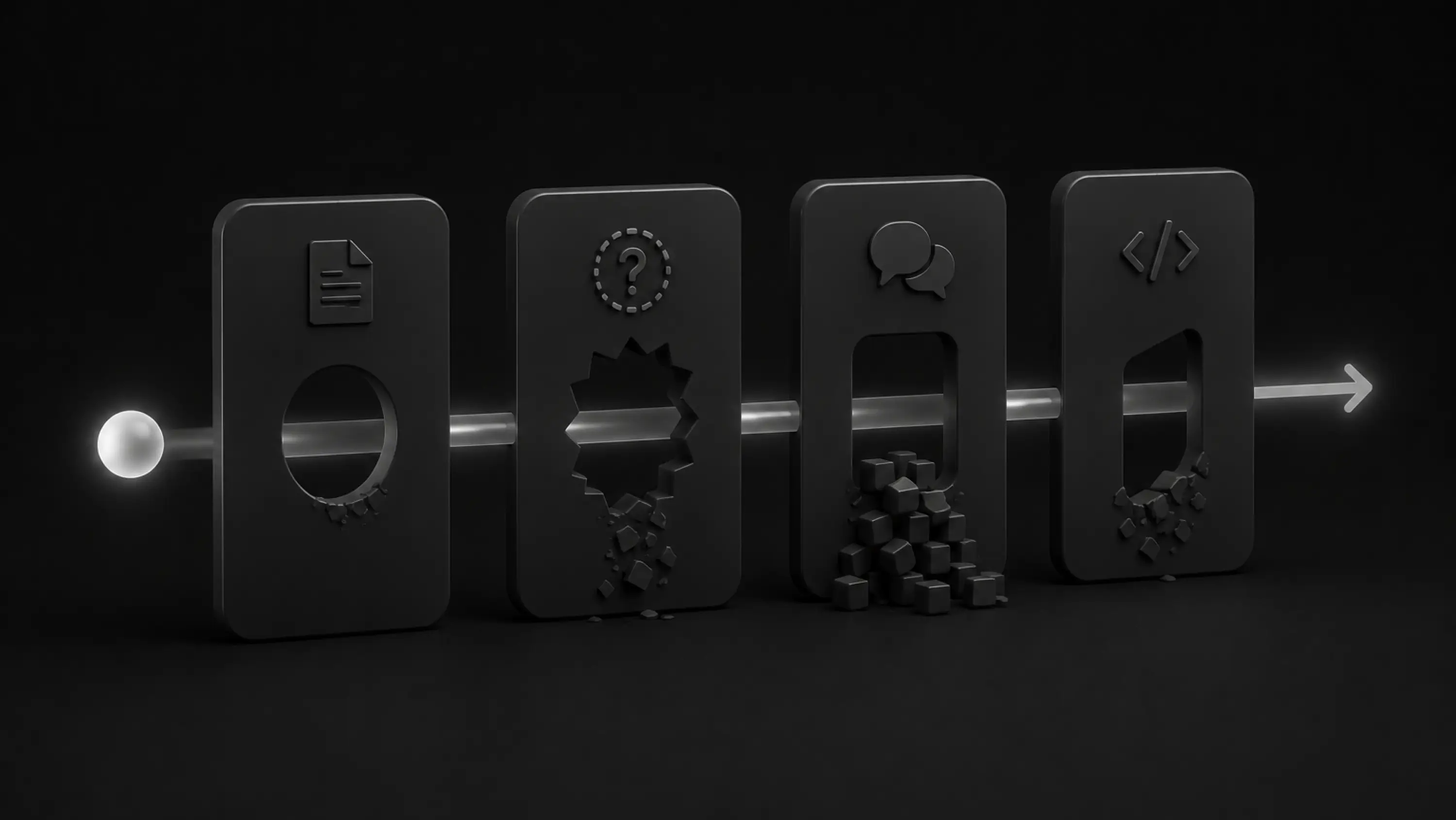
Notice what's common across all four: none of them are about the designer's talent. All of them are process failures, which means all of them are preventable.
When Outsourcing Makes Sense (and When It Doesn't)
Outsourcing fits some situations far better than others. It is usually the right call when you're launching a new product and need senior expertise fast, when your team has no dedicated designer and the marketing manager with Canva is the current plan, when a redesign or one-off project doesn't justify a full-time hire, or when a deadline demands more capacity than you can recruit in time.
It is usually the wrong call in one specific case: when design is the core of your competitive advantage and you need someone living inside user feedback every single day. Companies at that stage build in-house teams and use external partners for overflow, audits, and specialized work. If you're not sure which side you're on, the honest test is whether you'd have enough design work to keep a full-time senior busy in six months. If not, outsource.
Choosing the Right Engagement Model
The model you choose shapes quality more than the vendor's portfolio does, because each model puts responsibility for consistency in a different place.
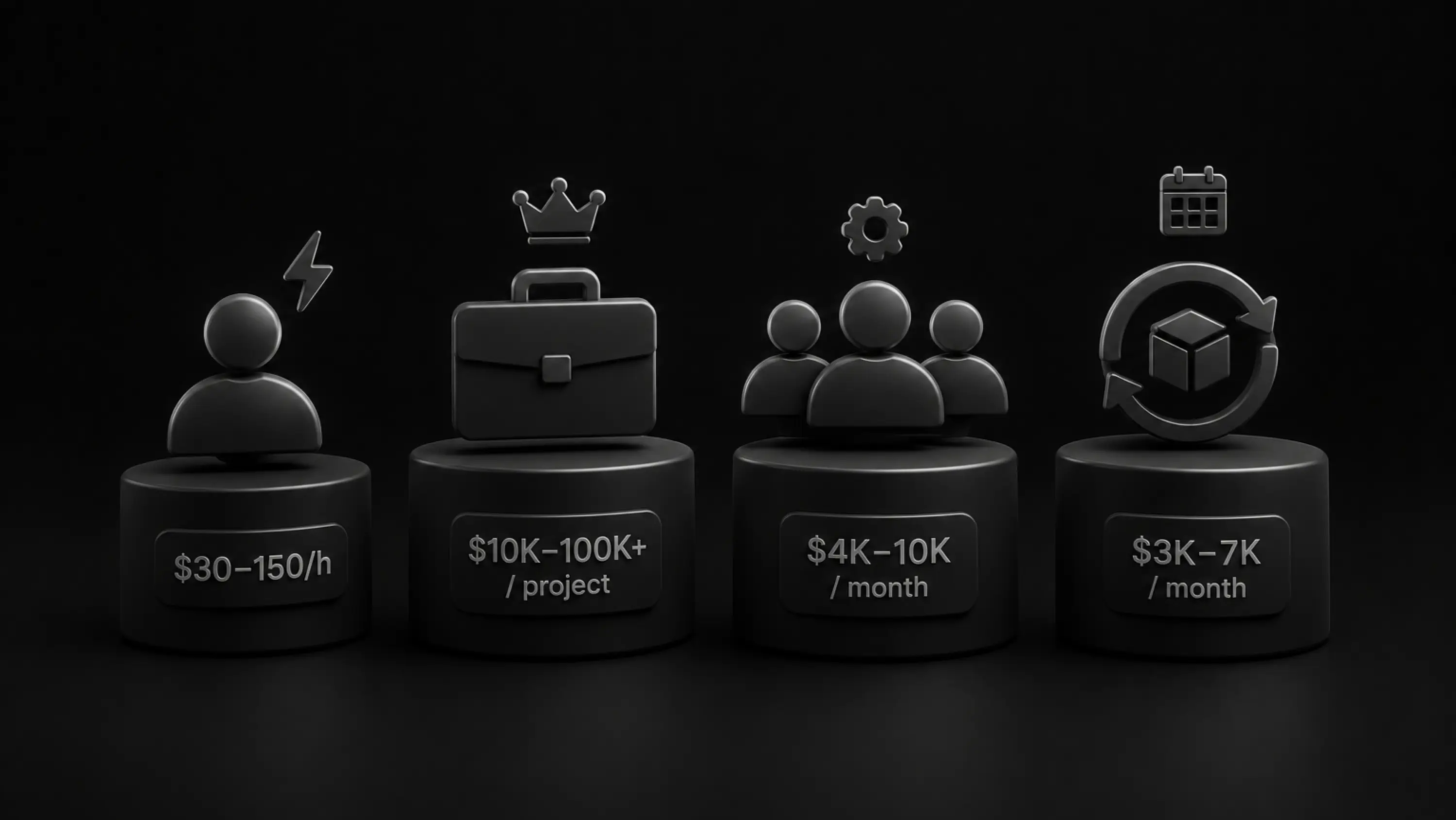
Model | Typical cost | Works best for | Quality risk |
|---|---|---|---|
Freelancer | $30 to $150/hour | Small, well-defined tasks | No backup, no QA process, consistency depends on one person |
Project-based agency | $10,000 to $100,000+ per project | Redesigns, new products with clear scope | Scope creep; quality drops if the scope was vague |
Dedicated designer / team | $4,000 to $10,000/month per designer | Ongoing product work, embedded in your sprints | Lowest risk, but requires internal product ownership |
Design subscription | $3,000 to $7,000/month | Continuous small tasks, marketing assets | Weak fit for deep product thinking and research |
The freelancer versus agency question deserves one honest paragraph. A strong freelancer beats a mediocre agency on both price and quality for a contained task. The agency's advantage appears at scale and over time: multiple specialists (researcher, UX, UI, motion), a project manager so coordination doesn't land on you, and continuity when someone gets sick or leaves. For a product you'll be iterating on for years, that continuity is a quality feature, not a luxury.
How to Outsource UX/UI Design: A Step-by-Step Process
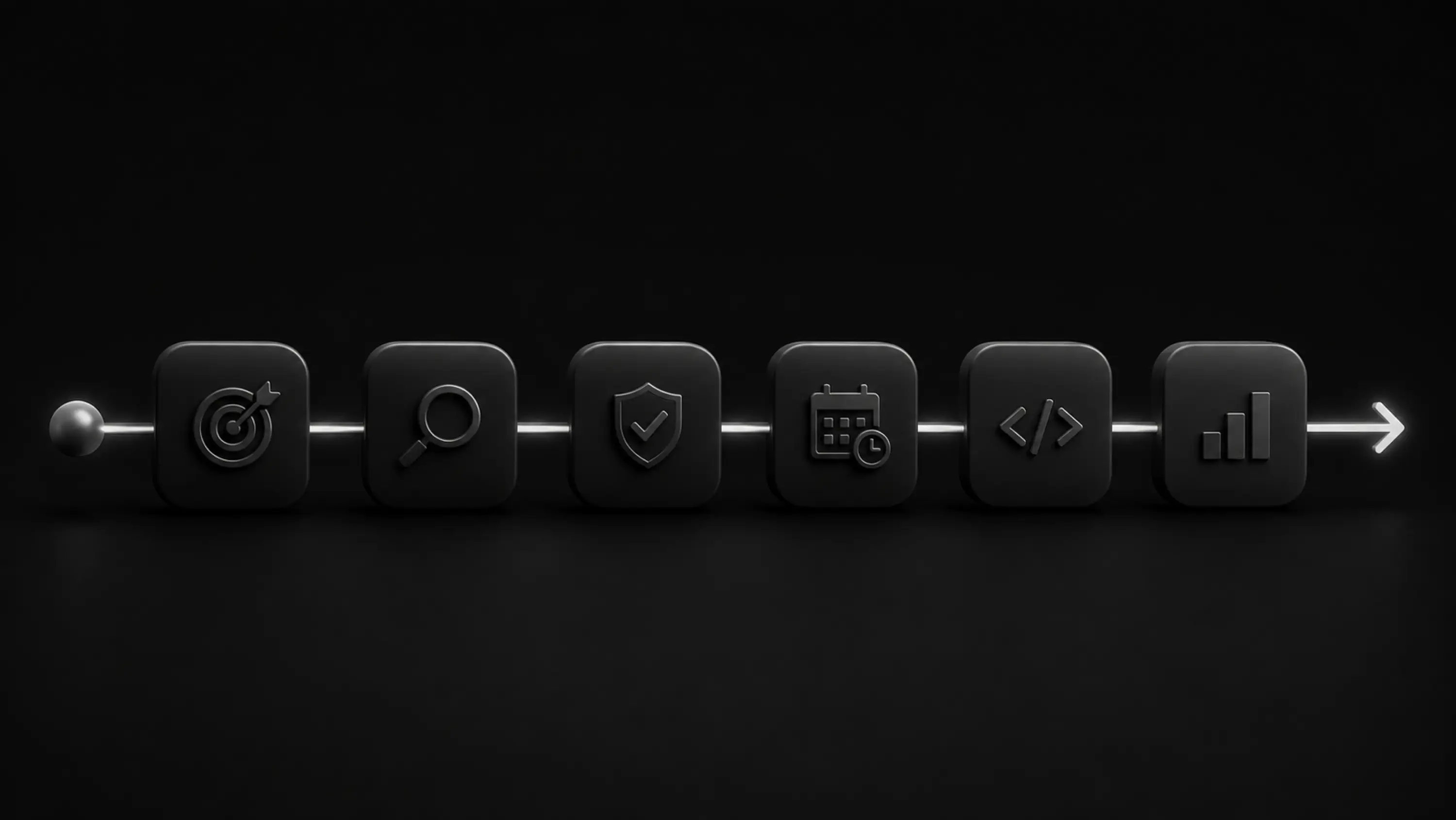
1. Define the Problem, Not Just the Deliverables
"We need 15 screens for our dashboard" is a purchase order. "Users churn in week one because they can't connect their data source" is a brief. The difference decides everything downstream, because a designer given a problem can challenge assumptions and propose better solutions, while a designer given a screen count can only execute your guesses. A working brief fits on two pages: the problem with evidence (metrics, support tickets, session recordings), your users and what they're trying to accomplish, business goals with numbers attached, technical constraints, and examples of products whose quality bar you want to match. If writing it feels hard, that's the point. Every ambiguity you resolve now is a revision round you won't pay for later.
2. Vet Partners on Process, Not Portfolios
Every portfolio looks good. Dribbble taught the whole industry to produce beautiful screenshots, which is exactly why screenshots tell you almost nothing. What separates strong partners is the reasoning behind the visuals, so in case studies look for the mess they inherited: the before state, the hypothesis, and a measured result. Then ask questions the portfolio can't answer. How do they handle a client disagreeing with a design decision? What happened on their last project that went wrong? Ask to see actual Figma files from a past project: component structure, naming, and auto-layout discipline reveal more about engineering-readiness than any case study.
Reference calls beat reviews. Ask past clients one question above all: what did the agency do when they missed or disagreed, since that behavior under friction is what you're actually buying.
3. Agree on Quality Standards Before Work Starts
This is the step everyone skips and the single biggest reason outsourced design disappoints. "High quality" means nothing until it's written down. Before the first screen, agree on three artifacts.
First, acceptance criteria per deliverable: every screen covers empty, loading, error, and success states; works at agreed breakpoints; meets WCAG AA contrast. Second, the source of truth: work happens in a design system, whether yours or one the partner builds, with tokens and components, not detached art files. A design system is the difference between design that survives your team's edits and design that degrades with every touch. Third, measurable outcomes: which metric should move after release, whether that's activation, task completion, or checkout conversion. If a partner resists defining any of this, they're planning to be judged on taste, and taste arguments are unwinnable for both sides.
4. Set a Communication and Review Cadence
Quality dies in silence. The classic failure pattern is three weeks of quiet followed by a "final" presentation and a shocked client, at which point changing direction is expensive and awkward. The fix is boring and works: a short weekly review of work in progress, feedback consolidated into one voice with one internal owner on your side, and decisions recorded where both teams see them. Review flows before polished mockups, since a wrong flow found at the wireframe stage costs an hour, and the same mistake found in high fidelity costs a week.
One caution from experience: more meetings do not equal more control. One structured review a week beats daily check-ins that turn designers into ticket-takers afraid to think.
5. Plan the Developer Handoff From Day One
The most expensive quality gap is between approved designs and shipped product. Prevent it by putting a developer in the room early, at wireframe reviews, not after final approval, so feasibility problems surface when they're cheap. Require specs your team can build from: real components, documented interaction states, motion parameters, and edge cases. And keep the design partner available during implementation, because developers will hit a hundred small decisions the mockups don't answer, and each one silently erodes quality if a designer isn't reachable. When we scope projects at Fivecube, implementation support is part of the engagement by default for exactly this reason.
6. Measure Outcomes After Launch
The project isn't over at file delivery. Compare the metrics against the goals from step three, run usability sessions on the shipped product, and feed what you learn into the next iteration. If the numbers didn't move, a good partner helps diagnose why instead of pointing at the contract. This is also where an independent UX audit earns its cost: it tells you whether the problem lives in the design, the implementation, or the positioning.
How Much Does It Cost to Outsource UX/UI Design
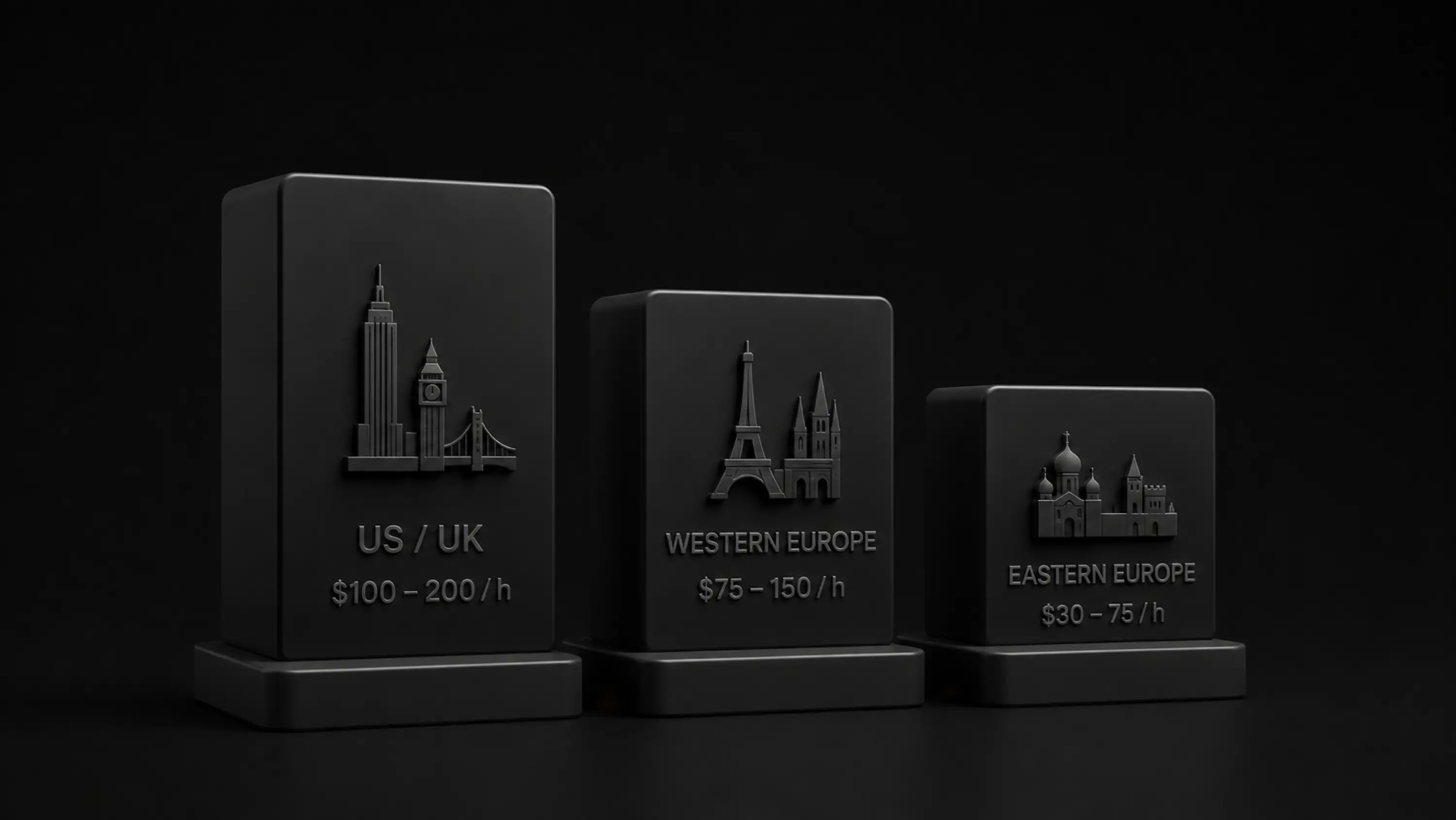
Rates vary mostly by region and seniority. US and UK agencies typically charge $100 to $200 per hour. Western Europe runs $75 to $150. Eastern European teams, including Ukraine, charge $30 to $75 per hour with senior-level output, which is why so many US startups design there. On Clutch, most reviewed UX/UI projects land between $10,000 and $50,000, with complex products crossing $100,000.
Watch the hidden costs, which have less to do with invoices than with structure: revision rounds beyond the included number, "file transfer" or tooling fees from freelancers, and above all the cost of vague scope, since every ambiguity in the contract eventually converts into either a change order or a quality compromise. Cheap partners are usually cheap somewhere specific: no research, no QA pass, no post-handoff support. You'll pay for the missing piece either way; the only question is whether it's itemized. For what goes into design pricing in more detail, see our design fees and pricing guide.
Red Flags That Predict Quality Problems
A few signals reliably predict a bad outcome before any design work starts. A partner who starts sketching solutions before asking about your users and metrics will deliver decoration, not design. No questions about your development stack means the handoff will hurt. A portfolio of beautiful screens with no accompanying reasoning, vague pricing that resists itemization, and no defined process for research or testing complete the pattern. Skipping the small startup mistakes matters too; we collected the most common ones in 7 design mistakes startups make, and an outsourced project amplifies every one of them.
The green flags are the mirror image: the partner interrogates your brief, shows you their process artifacts unprompted, brings a developer's perspective into design reviews, and talks about your metrics more than their awards.
By
Fivecube Team
Frequently Asked Questions
How much does it cost to outsource UI/UX design?
Hourly rates range from $30 to $75 in Eastern Europe, $75 to $150 in Western Europe, and $100 to $200 in the US. Most agency projects on Clutch fall between $10,000 and $50,000. Dedicated designers run $4,000 to $10,000 per month, and design subscriptions start around $3,000 per month.
Should I hire a freelancer or a design agency?
A freelancer suits small, well-defined tasks where one skill set is enough. An agency suits ongoing product work and complex projects, because it provides multiple specialists, project management, and continuity if someone leaves. For a product you'll iterate on for years, continuity usually decides it.
What are the main risks of outsourcing design?
The big four are a vague brief that produces the wrong solution, undefined quality standards that turn reviews into taste debates, late bulk feedback that forces expensive rework, and a neglected developer handoff that degrades the design in implementation. All four are process risks you can prevent, not vendor lottery.
When should you outsource UX design?
When you need senior expertise faster than you can hire it: new product launches, redesigns, one-off projects, or filling a gap while your team scales. Keep design in-house only when it's your core differentiator and there's enough work to keep a senior designer busy year-round.
How do you manage an outsourced design team?
Assign one internal owner who consolidates feedback, hold a short weekly review of work in progress, review flows before polished visuals, document decisions where both teams see them, and keep the design team available through development. Structure beats frequency: one focused review outperforms daily micromanagement.
Outsourcing UX/UI design doesn't have to mean trading quality for savings. Quality is preserved by the process around the work: a problem-first brief, written acceptance criteria, early developer involvement, and a partner who welcomes being measured. If you want to see how that looks in practice, talk to Fivecube, and we'll start with your problem, not your screen count.
Previous Article


Want a tailored solution?
Let’s build something great together!