
The old SaaS playbook, raise money, buy traffic, and outspend competitors on acquisition, quietly stopped working somewhere around 2023. Customer acquisition costs kept climbing while buyers grew tired of yet another subscription. The SaaS growth strategies that work in 2026 look different: they compound instead of burn, and they lean on retention, product experience, and AI leverage rather than raw ad spend.
This article covers both sides of that shift. First, the trends reshaping the market this year. Then, the strategies growing companies are using to capitalize on them, with enough specifics that you can act on each one.
The SaaS Market in 2026: Where Growth Comes From Now
The market itself is still expanding fast. Fortune Business Insights projects global SaaS revenue will reach $908 billion by 2030, growing at 18.7% annually. So the pie is getting bigger. The catch is that the number of companies fighting for each slice grew even faster, and buyers respond with subscription fatigue, consolidation of their tool stacks, and much tougher procurement reviews.
That changes the math of growth. When acquiring a new customer costs more every quarter, the cheapest revenue is the revenue you already have. Scaling companies now treat expansion, meaning upsells, seat growth, and usage growth inside existing accounts, as a primary engine rather than a bonus. The strategic question has shifted from "how fast can we grow" to "how efficiently can we grow, and how defensible is that growth."
Keep that lens on while reading the trends below. Each one matters exactly to the degree it makes growth cheaper, stickier, or harder to copy.
Key SaaS Trends to Watch in 2026
Trend | What is changing | What to do about it |
|---|---|---|
AI-native products | AI moves from feature to foundation; agents perform work, not just assist | Redesign core workflows around outcomes, not screens |
Vertical and micro SaaS | Niche tools with deep domain fit outcompete horizontal platforms | Narrow positioning, build industry-specific workflows |
Usage-based and hybrid pricing | Pay-for-what-you-use lowers entry barriers and grows with the account | Add a usage component without killing revenue predictability |
Security as a sales argument | SOC 2 and compliance moved from checkbox to deal-breaker | Get certified early, publish a trust page |
ESG expectations | Sustainability enters procurement criteria, especially in the EU | Measure and report before regulation forces it |

AI-Native Products and Agentic AI
Every SaaS product added an AI assistant between 2023 and 2025. In 2026 that is no longer a differentiator, and the frontier has moved to agentic AI: software that completes multi-step work on its own rather than suggesting text in a sidebar. Zendesk reports its AI resolves up to 80% of support queries without a human, and that pattern is spreading from support into finance, HR, and operations tooling.
The deeper shift is architectural. AI-native companies build the model into the core workflow, the go-to-market motion, and internal operations, not just the feature list. There is also a revenue case: a McKinsey analysis found that companies using AI for customer personalization achieve 5 to 15% higher revenue than competitors that don't.
For product teams this creates a design problem nobody fully solved yet. When an agent does the work, what does the interface show? Companies that answer that question with clear task visibility and easy human override will earn trust faster than those that hide the agent behind a chat window.
Vertical and Micro SaaS
Horizontal platforms are losing ground to tools built for one industry. A construction SaaS that ships with project timelines, supplier management, and site reporting in one system beats a generic project tracker configured to imitate it, because it also handles the compliance and terminology the generic tool never will. Vertical products command higher prices and churn less, since switching away means losing domain logic, not just data.
Micro SaaS is the same idea at smaller scale: one narrow problem, a small team, no outside funding required. AI coding tools cut development costs enough that a two-person team can now ship and maintain a product that would have needed ten people in 2020. Expect more of these niche competitors nibbling at the edges of every large platform's feature set.
Usage-Based and Hybrid Pricing
Flat per-seat pricing is aging badly, partly because AI agents reduce seat counts. If your product does the work of three analysts, charging per human login caps your own revenue. Usage-based models charge for what the customer actually consumes, the way Twilio prices messages or Snowflake prices compute, which lowers the barrier to entry and lets revenue grow with the account automatically.
Pure usage pricing has a downside finance teams hate: unpredictable bills. That is why the hybrid model became the 2026 default, a subscription base that guarantees predictable revenue plus usage components that capture upside. If you sell an AI-heavy product, some usage or outcome-based component is close to mandatory, because your own inference costs scale with customer activity.
Security and Compliance as a Sales Argument
SaaS platforms hold the most sensitive data companies have, which makes them prime targets, and enterprise buyers know it. A missing SOC 2 report now kills deals before the demo stage: procurement simply filters vendors out. The bar keeps rising with zero-trust access, AI-driven threat detection, and regional data residency requirements, especially for European customers under tightening EU regulation.
The growth angle is to treat security as marketing. A public trust page, fast security questionnaire turnaround, and certifications obtained before you strictly need them shorten enterprise sales cycles measurably. Vendors that treat compliance as an afterthought pay for it in stalled deals.
Sustainability and ESG Expectations
ESG criteria are entering software procurement, led by European enterprises that must report on their supply chain, including their software vendors. Energy-efficient infrastructure and transparent emissions reporting won't win you deals on their own, but their absence is starting to lose them in RFP processes. Getting basic measurement in place during 2026 is cheap insurance against the regulation that follows.
SaaS Growth Strategies That Actually Work in 2026
Growth Metrics That Matter in 2026
Investors and boards changed their scoreboard, and internal teams should match it. Growth at any cost is out; efficient, durable growth is in. The metrics worth watching weekly:
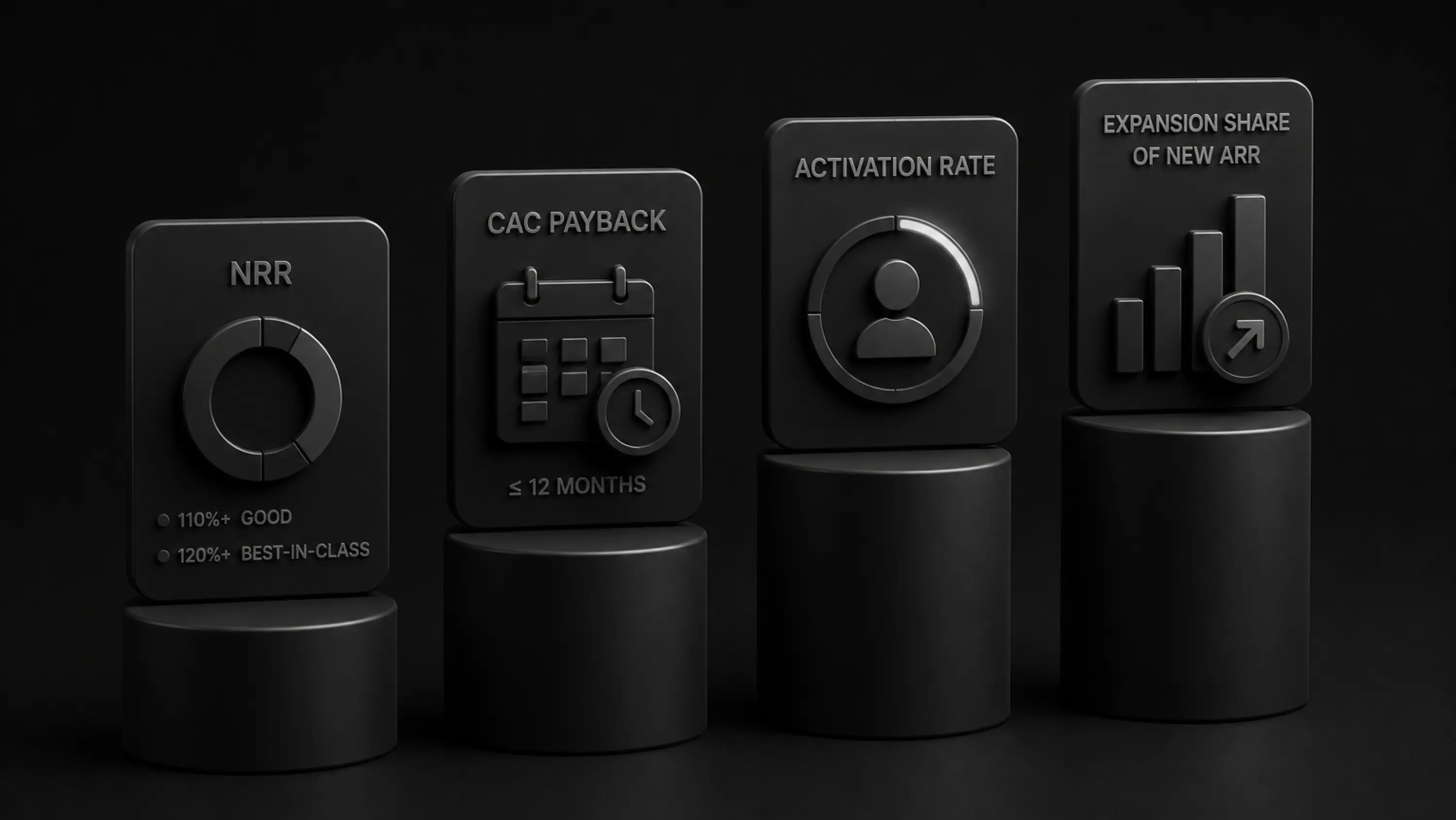
Net revenue retention (NRR): the health of your existing base. Above 110% means expansion outruns churn; best-in-class B2B products push past 120%.
CAC payback period: how many months of gross margin it takes to recover acquisition cost. Under 12 months is strong in 2026; over 24 signals a motion that won't survive tight capital.
Activation rate: the share of signups reaching first value. It is the earliest leading indicator you have, since it moves weeks before revenue does.
Expansion share of new ARR: how much growth comes from existing accounts. A rising share means your growth is getting cheaper and more defensible at the same time.
Vanity metrics like raw signups and traffic still have their place in channel debugging, but none of them belong on the dashboard a founder checks first.
By
Fivecube Team
Frequently Asked Questions
How is AI transforming SaaS products in 2026?
AI moved from add-on features to the core of the product. Agentic AI completes multi-step work autonomously, support bots resolve the majority of routine queries, and personalization adapts onboarding and interfaces per user. Companies applying AI to personalization see 5 to 15% higher revenue than competitors that don't, per McKinsey research.
What is micro SaaS and why is it growing?
Micro SaaS is a small, focused product serving one niche, typically built by a tiny team without outside funding. It is growing because AI-assisted development slashed the cost of building and maintaining software, letting small teams profitably serve markets too narrow for venture-backed platforms to bother with.
How does usage-based pricing affect SaaS growth?
It lowers the entry barrier, since customers start small without big commitments, and it ties revenue to the value delivered, so accounts grow without renegotiation. Most companies pair it with a subscription base in a hybrid model to keep revenue predictable while capturing usage upside.
Is product-led growth still effective in 2026?
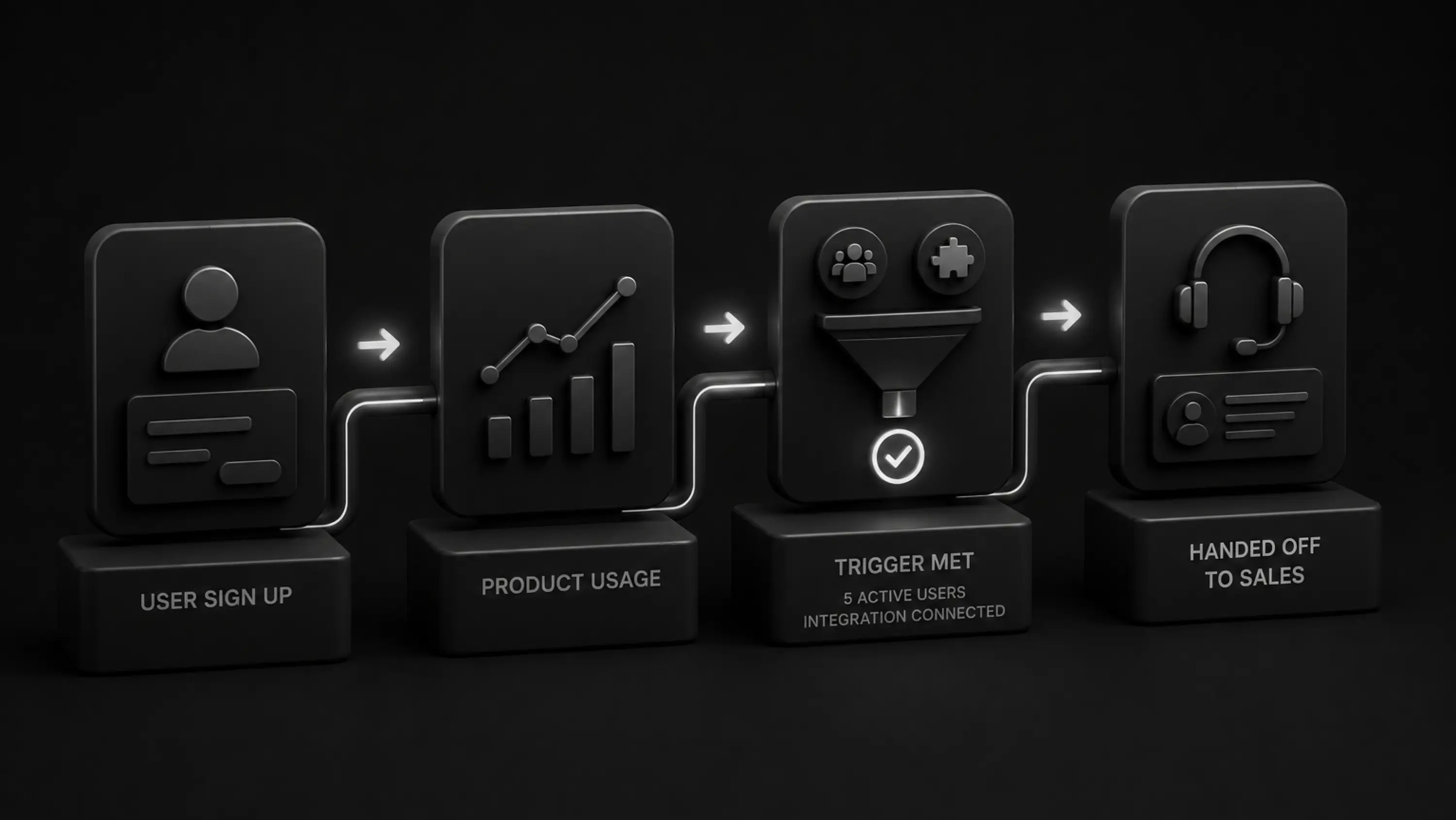
Yes, but rarely alone. PLG remains the cheapest way to acquire and activate users, and the companies growing fastest layer a sales motion on top, using product usage data to identify accounts ready for enterprise conversations. Pure self-serve and pure sales-led are both losing to that hybrid.
Which SaaS metrics matter most for growth?
Net revenue retention, CAC payback period, activation rate, and the share of new ARR coming from expansion. Together they answer the two questions that define 2026: how efficient is your growth, and how durable is it.
The common thread through all of these SaaS growth strategies is compounding: retention compounds, communities compound, and design improvements compound across every future cohort. If your product or website is the bottleneck between strategy and results, talk to Fivecube and we'll help you find where the leaks are.
Previous Article


Want a tailored solution?
Let’s build something great together!