
Most products don't fail because the idea was bad. They fail because the team skipped a step, built the wrong thing quickly, and found out only after launch. A clear product design process is what prevents that. It moves a rough idea toward a product people actually use, and it gives everyone involved a shared map of what happens next.
This guide walks through the process the way it runs in practice, one stage at a time, from the first discovery conversation to the weeks after launch. Treat the stages as a sequence you'll loop through, not a checklist you finish once.
The product design process at a glance
The product design process is the structured path a team follows to get from a problem worth solving to a working product in users' hands. Teams name the stages differently, some use five, others seven or eight, but the work underneath is the same. Here's the version this guide follows:
Stage | What happens | What you walk away with |
|---|---|---|
1. Discovery & research | User interviews, surveys, market analysis | A clear picture of the user and the problem |
2. Define the problem | Turn findings into one problem statement and success metrics | A direction the whole team agrees on |
3. Ideation | Sketch and compare several concepts | A few strong directions to pursue |
4. Wireframing & prototyping | Build structure, then a clickable prototype or MVP | Something real enough to test |
5. Testing & iteration | Watch real users, refine, repeat | A validated design |
6. Handoff to development | Specs, components, and close contact with engineers | A build that matches the design |
7. Launch & post-launch | Ship, measure against metrics, keep improving | A live product and a feedback loop |
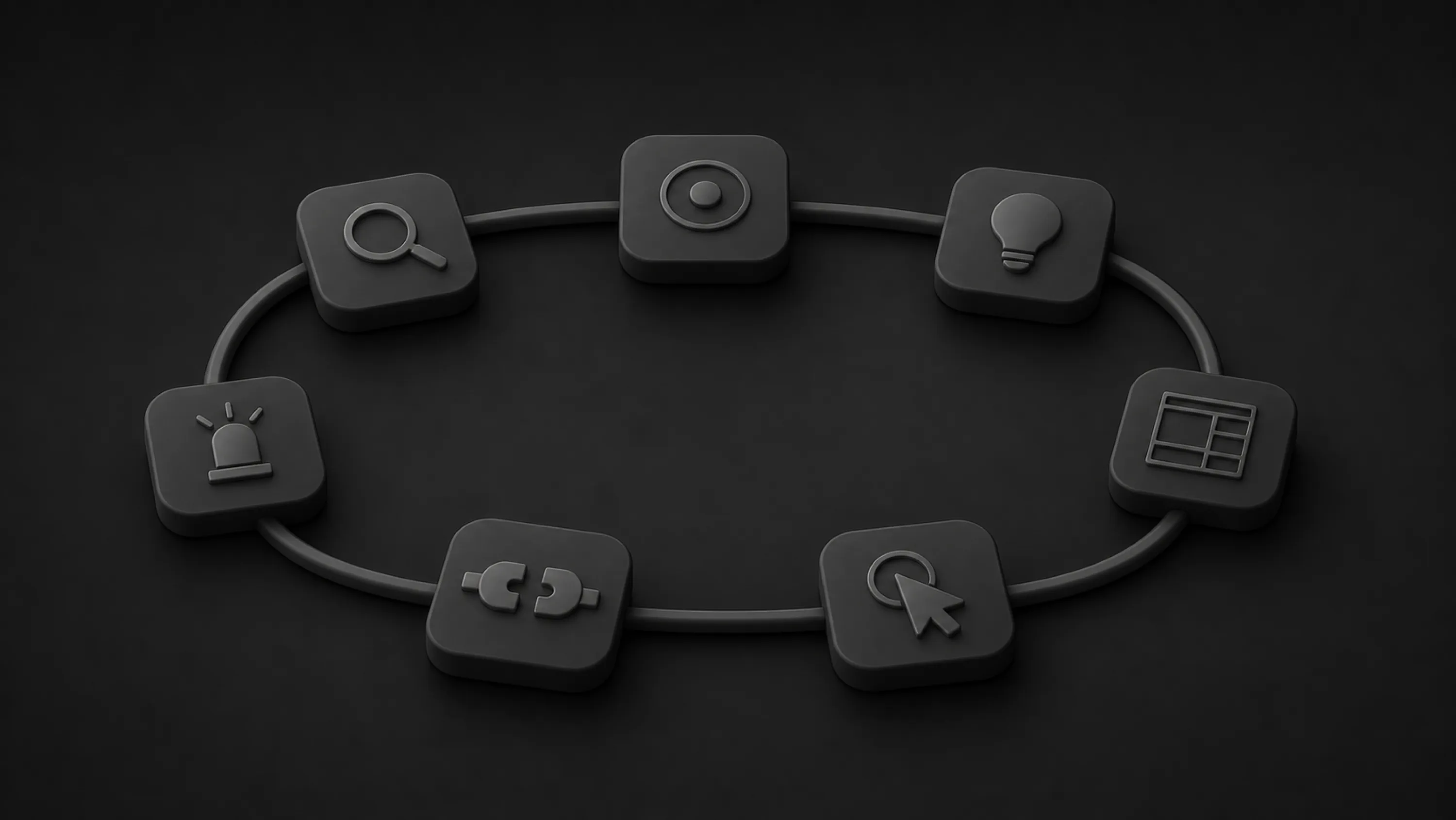
One thing to get right early: the process is iterative, not linear. You rarely move cleanly from one stage to the next and never look back. Testing surfaces a flaw that sends you back to define the problem again. A technical constraint reshapes a design you thought was finished. Most modern teams have dropped the rigid waterfall model in favor of loops, where research, design, and testing feed each other. The stages give you structure without pretending the path is a straight line.
Stage 1. Discovery and research
Everything starts with understanding the problem, not sketching the solution. Discovery is where you learn who the users are, what they're struggling with, and whether the problem is worth solving at all. Skip it, and every later decision inherits the assumptions you made without evidence.
Two kinds of research do the heavy lifting here:
User research: interviews, surveys, and field observation that tell you what people actually need, not what you assume they need.
Market research: a look at who else solves this problem, how they do it, and where the gaps are.
Together they replace opinion with evidence. If you're formalizing this step, dedicated UX research services exist to keep it rigorous rather than anecdotal. The output of discovery isn't a design. It's clarity about the user, the problem, and the opportunity.
Stage 2. Define the problem
Research produces a pile of findings. Definition turns that pile into a single, clear problem statement the whole team can rally behind. Teams love to rush this step, and it's where a lot of products quietly go wrong, because a vague problem leads to a vague product.
A good problem statement is specific about who has the problem, what the problem is, and why it matters. It sets the boundaries of the project and becomes the reference point for later decisions. When someone asks "should we add this feature?", the problem statement answers the question. Most teams pair it with success metrics and a short requirements document, so that "done" means the same thing to everyone.
Stage 3. Ideation and concepts
With a clear problem, the team can finally explore solutions, and the goal at this point is quantity before quality. Ideation generates a wide range of possible approaches through sketching, storyboarding, and journey mapping, before narrowing to the strongest directions.
The trap is falling in love with the first idea. The value of ideation comes from putting several genuinely different concepts on the table and pressure-testing them against the problem statement. Keep it cheap and disposable: a sketch you throw away costs nothing, while a built feature you have to remove costs weeks.
Stage 4. Wireframing and prototyping
Now the chosen concept takes shape. Wireframes lay out structure and flow without visual polish, so the team can agree on how the product works before worrying about how it looks. Prototypes then add fidelity, turning static layouts into something clickable that behaves like the real product.
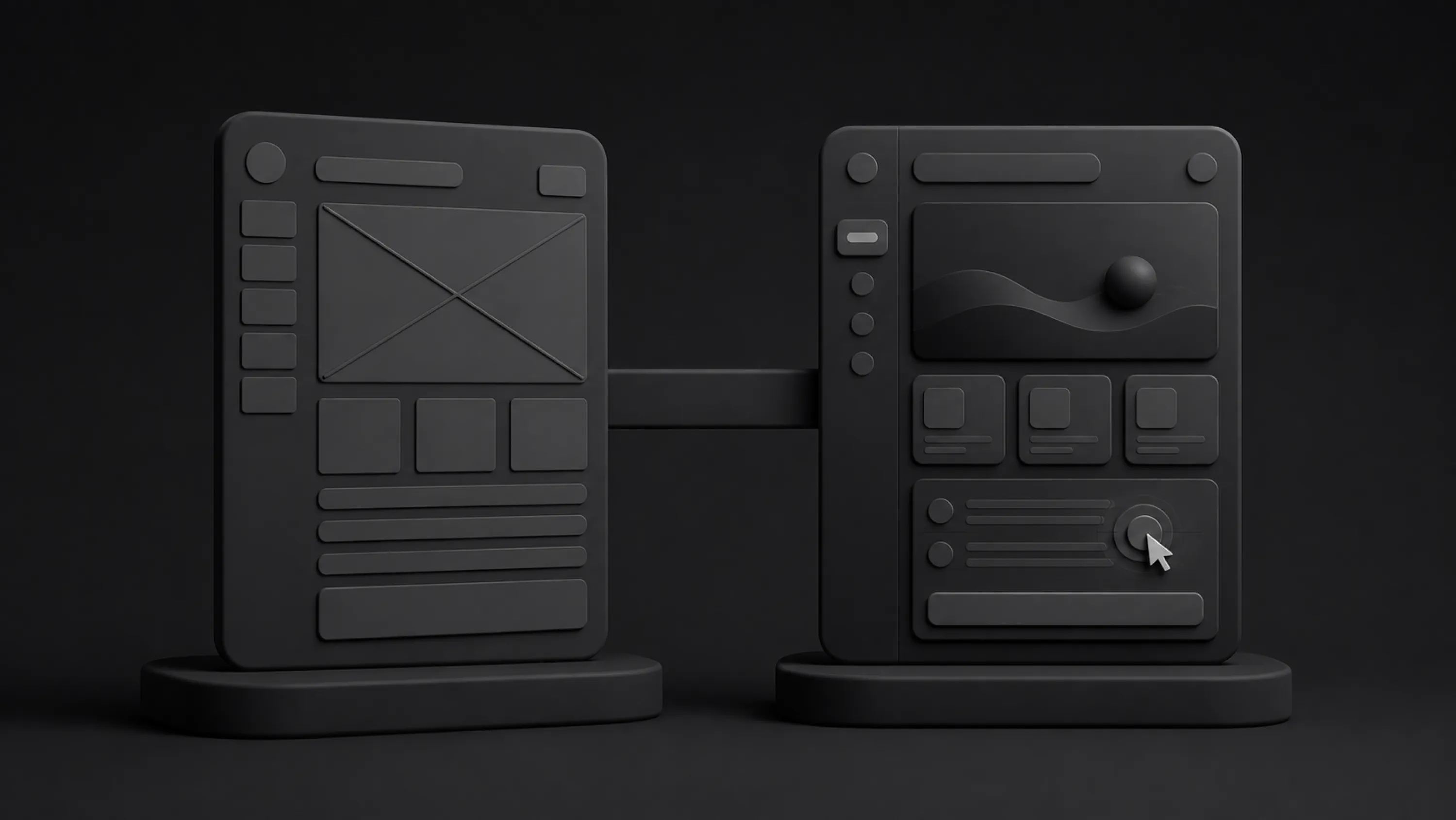
Prototypes exist to be tested, not admired. Their purpose is to make ideas tangible enough that real users can react, which surfaces problems while they're still cheap to fix. For many teams this is also where a minimum viable product takes shape: the smallest version that delivers the core value. If you're weighing how much to build here, the difference between a proof of concept, prototype, and MVP is worth understanding before you commit engineering time.
Stage 5. Usability testing and iteration
Testing is the feedback engine of the whole process. You put the prototype in front of real users, watch how they use it, and learn where they get confused or stuck. What people say they'll do and what they actually do are often different things, and usability testing shows the gap. According to the Nielsen Norman Group, even a handful of participants surfaces most usability issues, so this doesn't need a huge study to pay off.
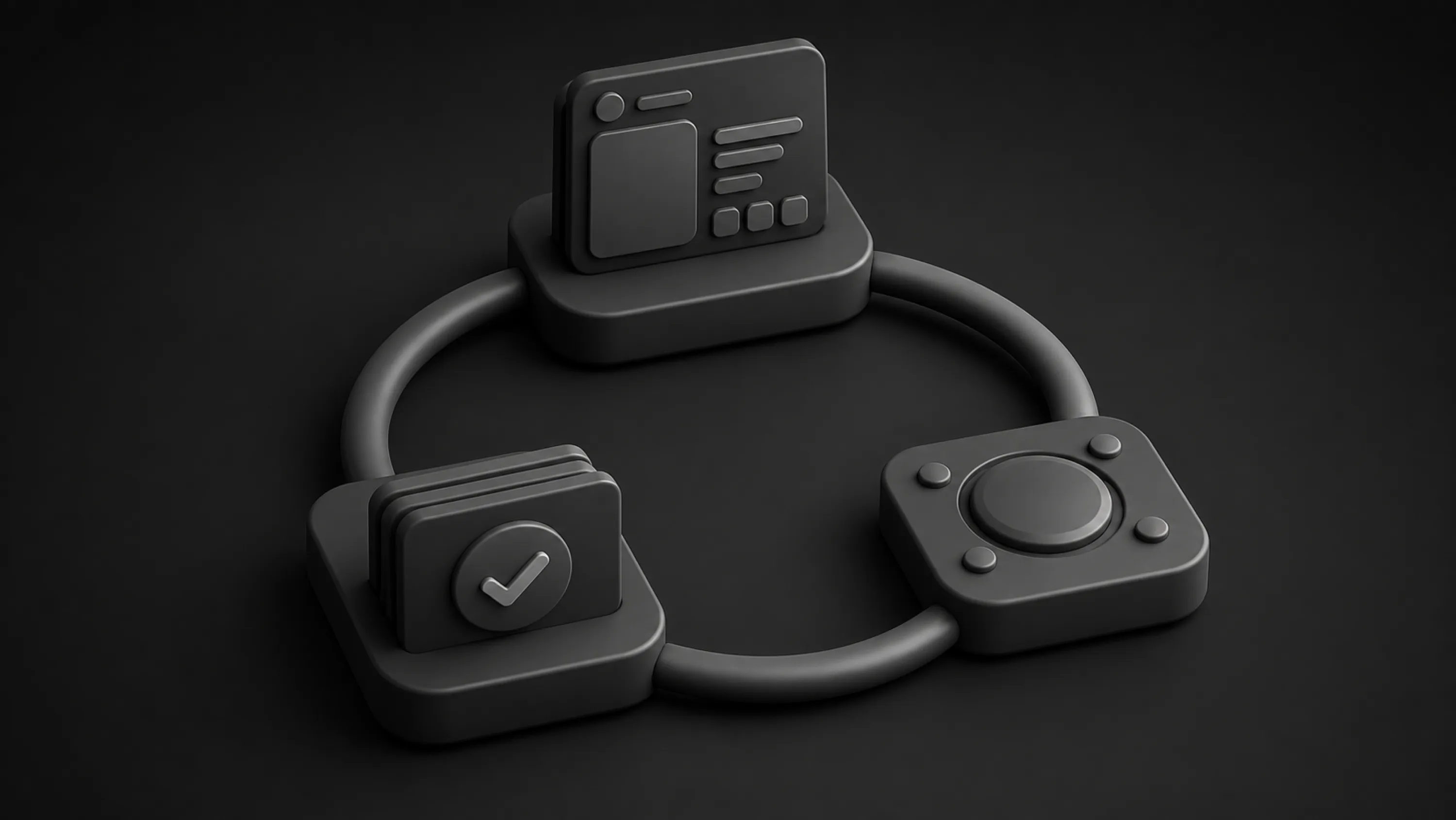
Then you iterate. Take what testing revealed, refine the design, and test again. This loop is the core of good product design, and it's why the earlier stages matter so much. The more you learn before you build, the fewer expensive surprises show up later. Iteration continues right up to launch, and past it.
Stage 6. Design handoff to development
A polished design is worthless if it degrades on the way to engineering, and this handoff is where a surprising number of products lose quality. Handoff is the point where designers give developers what they need to build accurately: final screens, specifications, component behavior, edge cases, and a design system that keeps things consistent.
Teams that handle this well treat it as a conversation, not a document dump. Designers and developers stay in contact through the build, so questions get answered and constraints surface early. When design and development sit close together, or live in the same team, the handoff gap shrinks and the shipped product matches the intent. When they're far apart, details slip and a clean prototype turns into an inconsistent build.
Stage 7. Launch and post-launch iteration
Launch is a milestone, not the finish line. Shipping means real users, at scale, doing things your test group never tried. That generates the richest feedback you'll ever get, so the process doesn't end. It enters a new loop.
After launch, you watch how the product performs against the success metrics you set back in the definition stage. Analytics show where people drop off. Support tickets and reviews show what frustrates them. Feedback shows what to build next. Strong teams treat the first weeks after launch as an active design phase rather than a victory lap, fixing friction in onboarding and the flows that data flags as weak. A good product design process never really stops. It just changes what it's optimizing for.
Where the process breaks down
Knowing the stages isn't the same as running them well. A few failure patterns show up again and again:
Skipping discovery to save time. It almost always costs more time later, when the team realizes it built the wrong thing.
Treating the process as strictly linear. Refusing to loop back when testing says the direction is wrong bakes the mistake in.
Polishing visuals too early. Beautiful screens that solve a problem nobody has are still a waste.
Underestimating handoff. Assuming a good design will survive the trip to production on its own is how quality quietly leaks out.
The fix for all of these is the same discipline: stay close to users, keep loops short, and validate before you build. If you're not sure where your own process is leaking, a structured UX audit can pinpoint the weak stages before they cost you a launch. You can also see how the full process plays out on real products in our case studies.
By
Fivecube Team
Frequently Asked Questions
What are the stages of the product design process?
Most teams work through discovery and research, defining the problem, ideation, wireframing and prototyping, usability testing and iteration, design handoff to development, and launch with post-launch iteration. The number of named stages varies, but the underlying work is consistent.
Is the product design process linear?
No, it's iterative. Teams move back and forth between stages as testing, technical constraints, or new user insights reveal that an earlier decision needs to change. The stages give structure, but the path loops.
How long does the product design process take?
It depends on scope. A small, well-defined product can move from discovery to launch in a couple of months, while a complex platform with deep research and multiple testing rounds can take six months or more. Building in time for iteration is what protects quality.
What's the difference between product design and product development?
Product design focuses on understanding users and shaping the experience, through research, wireframes, prototypes, and testing. Product development is the engineering work that builds and ships it. The two overlap most at the handoff stage, and work best when they stay in close contact.
Why is user research so important early on?
Because every later decision inherits the assumptions made at the start. Research early replaces guesswork with evidence about what users actually need, which is far cheaper than discovering you built the wrong thing after launch.
Where does an MVP fit in the process?
An MVP usually takes shape during prototyping and early development. It's the smallest version that delivers the core value, built to put in front of real users so you can validate the concept before investing in the full product.
Previous Article
Next Article

Want a tailored solution?
Let’s build something great together!